Putnam County Land Buyers Guide (Step-by-Step)
This free guide walks you through 8 things you MUST check before buying land in Putnam County
Created by Dusty Roads LLC
Why This Guide Matters
Buying land in Putnam County can be confusing if you’re not familiar with zoning, access, septic rules, and county regulations. This guide walks you through the exact due‑diligence process Dusty Roads LLC uses to help customers avoid costly mistakes.
Step 1 — Look Up the Parcel on the Property Appraiser Website
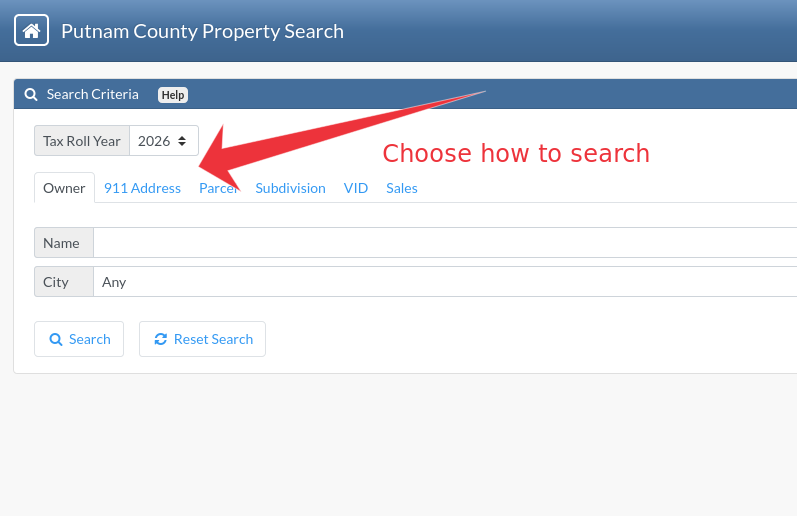
Go to the Putnam County Property Appraiser (PCPA) search tool.
Search by address, owner name, or parcel number.
When the parcel loads, confirm:
• Parcel ID number
• Acreage (actual lot size)
• Property classification
• Land use code
• Legal description
• Current owner
911 Address (You’ll need this later)
Step 2 — Check the Zoning Category
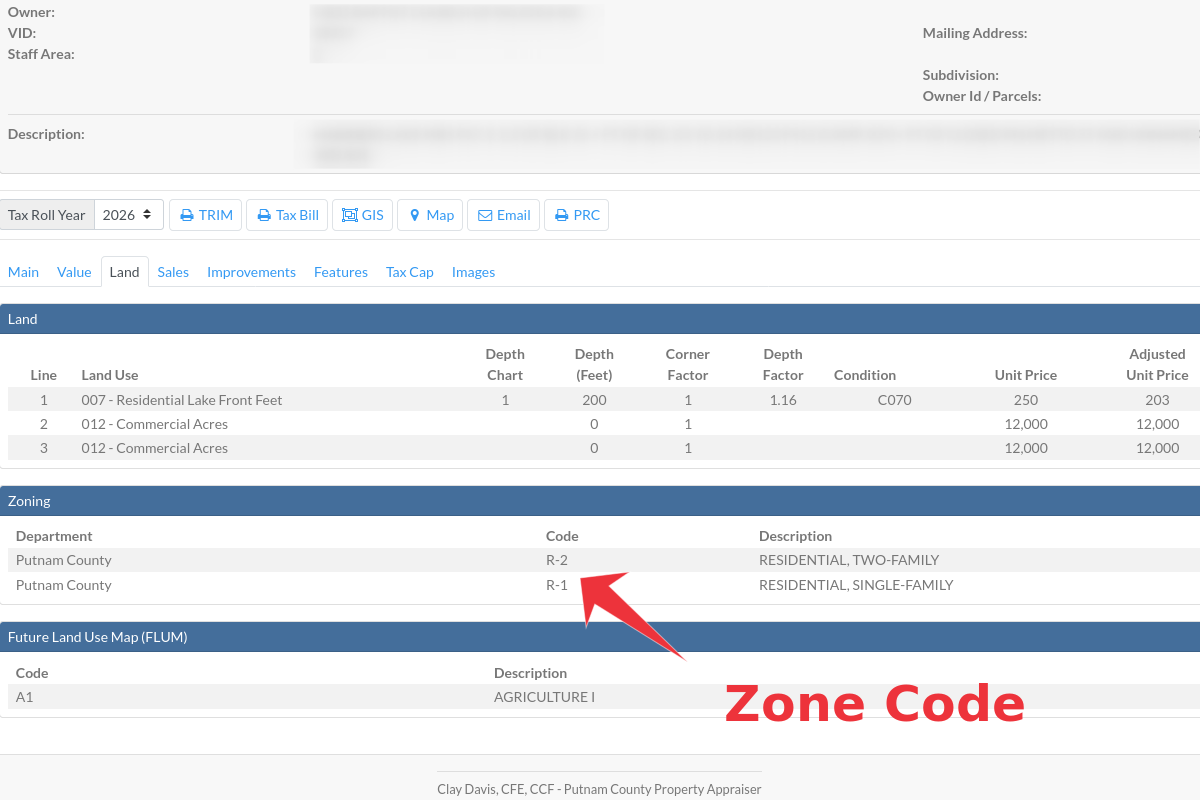
Click on the Land tab. You should see the specific zoning for the property.
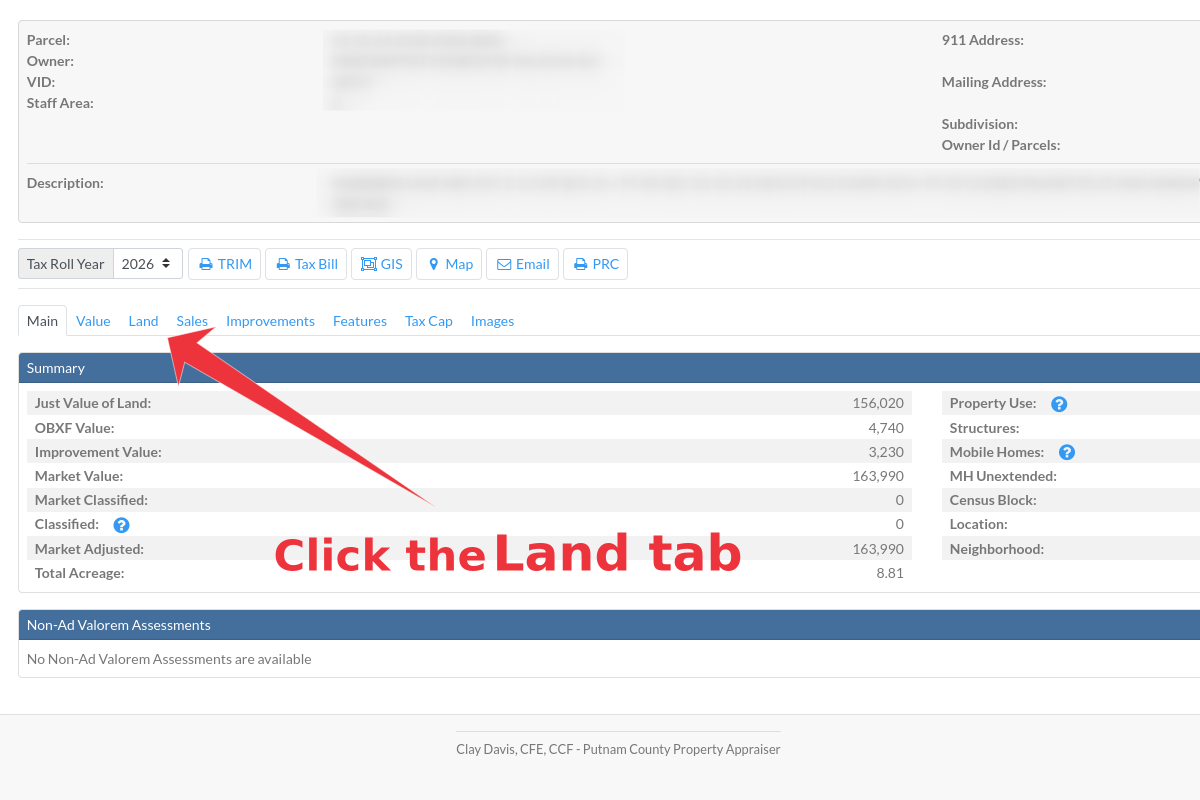
look at the zoning section. Common Putnam County zoning codes include:
• R-1: Residential, single-family
• R-2: Residential, multi-use
• AG: Agriculture
• RURAL CENTER: Rural community zones
Different zoning categories have different rules for:
• Minimum dwelling size
• Mobile homes vs site-built homes
• Accessory structures (sheds, garages, pole barns)
• Setbacks
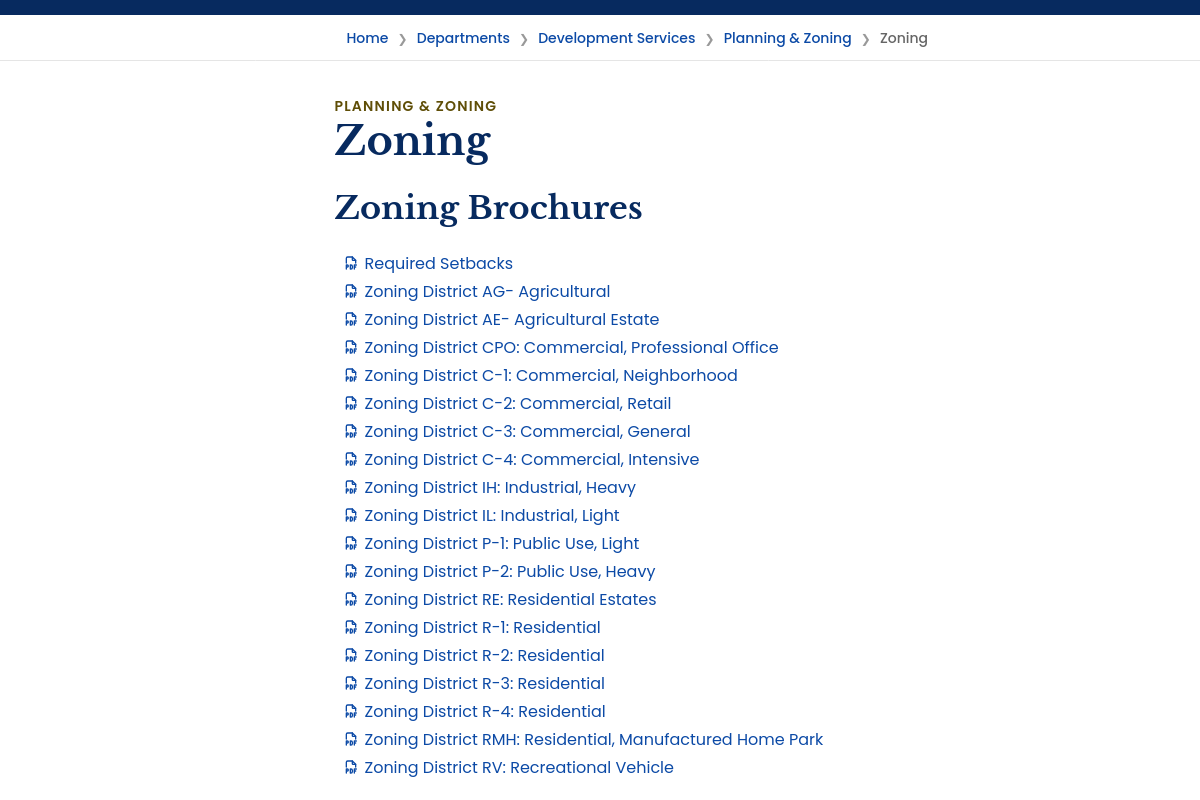
To verify zoning rules, contact Putnam County Zoning directly or use the Putnam County Land Development Code available online.
Use the following link to get the description.
https://www.putnam-fl.gov/departments/development-services/planning-and-zoning/zoning/
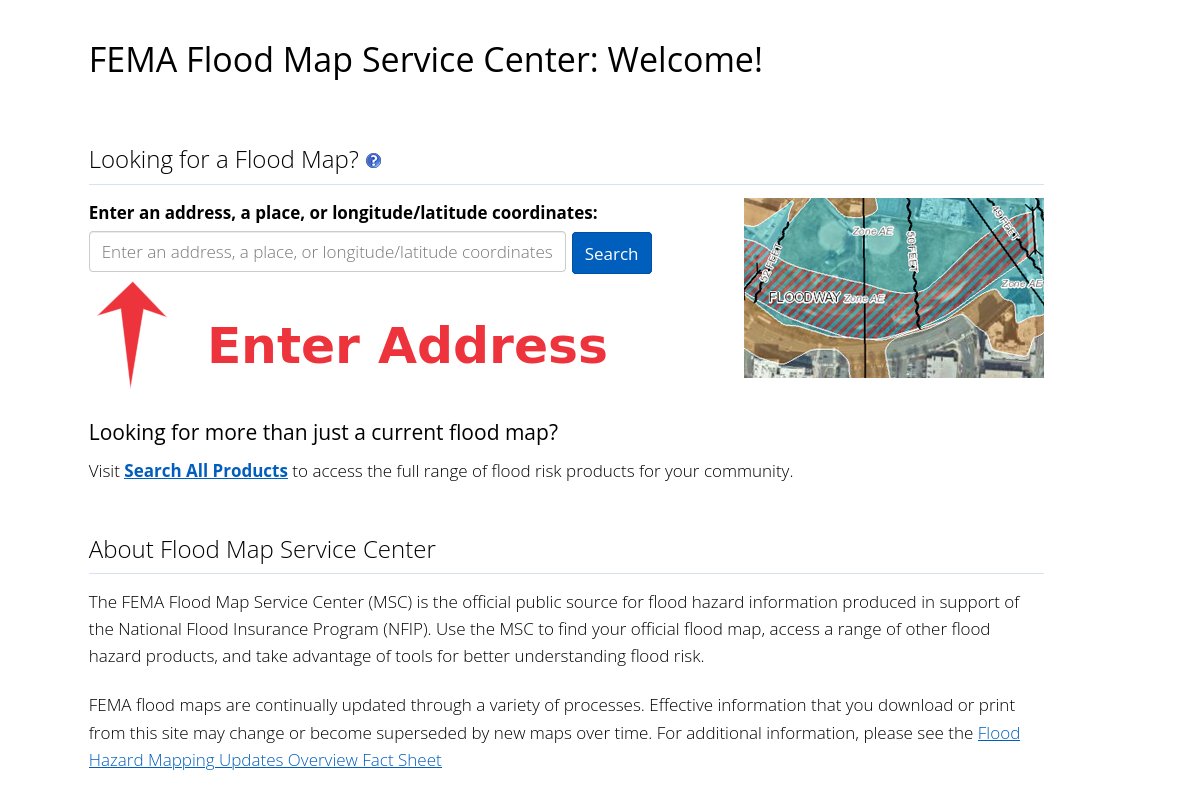
Step 3 — Check for Flood Zones
Visit FEMA’s Flood Map Service Center. Enter an address, a place, or longitude/latitude coordinates:
FEMA Flood Map Service Center (https://msc.fema.gov/portal/home)
Step 4 — Check for Wetlands
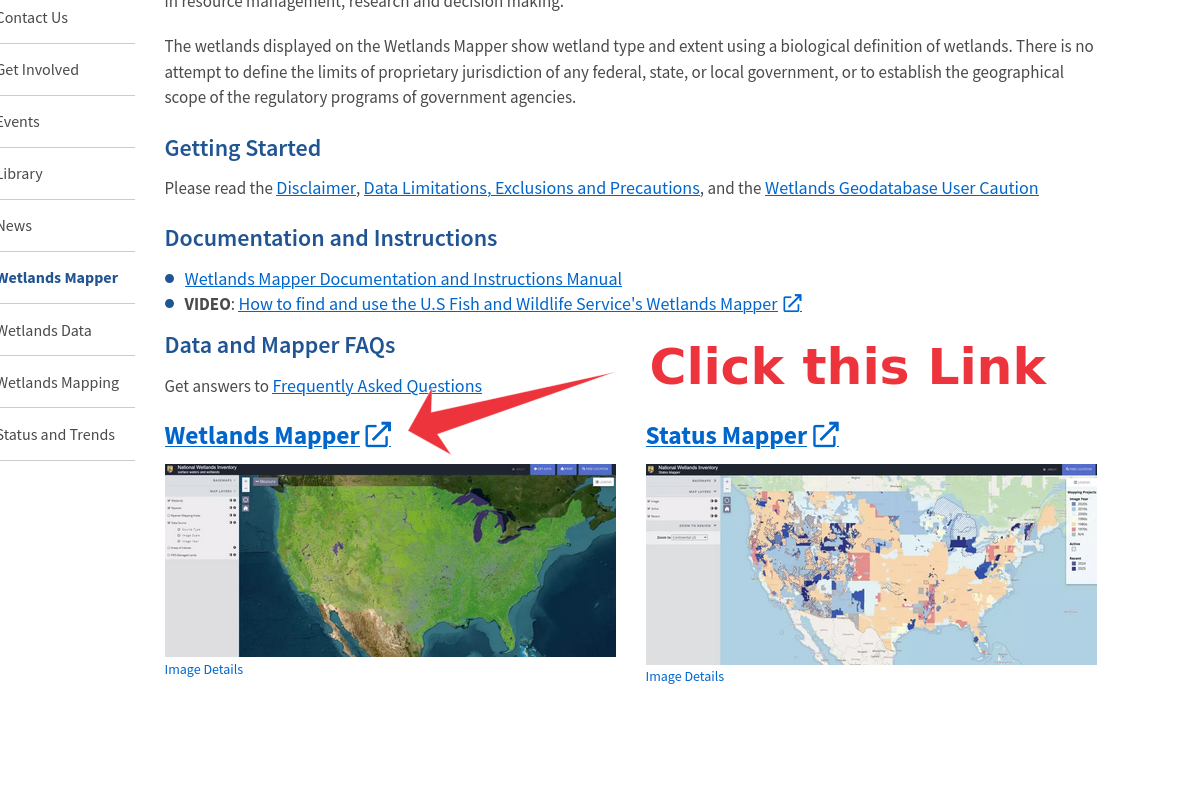
Go to the USDA Web Soil Survey or the National Wetlands Inventory (NWI).
Wetlands can limit building, clearing, and driveway placement.
If the map shows wetlands, you may need an environmental specialist to confirm the boundaries.
Click on the “Wetlands Mapper” button.
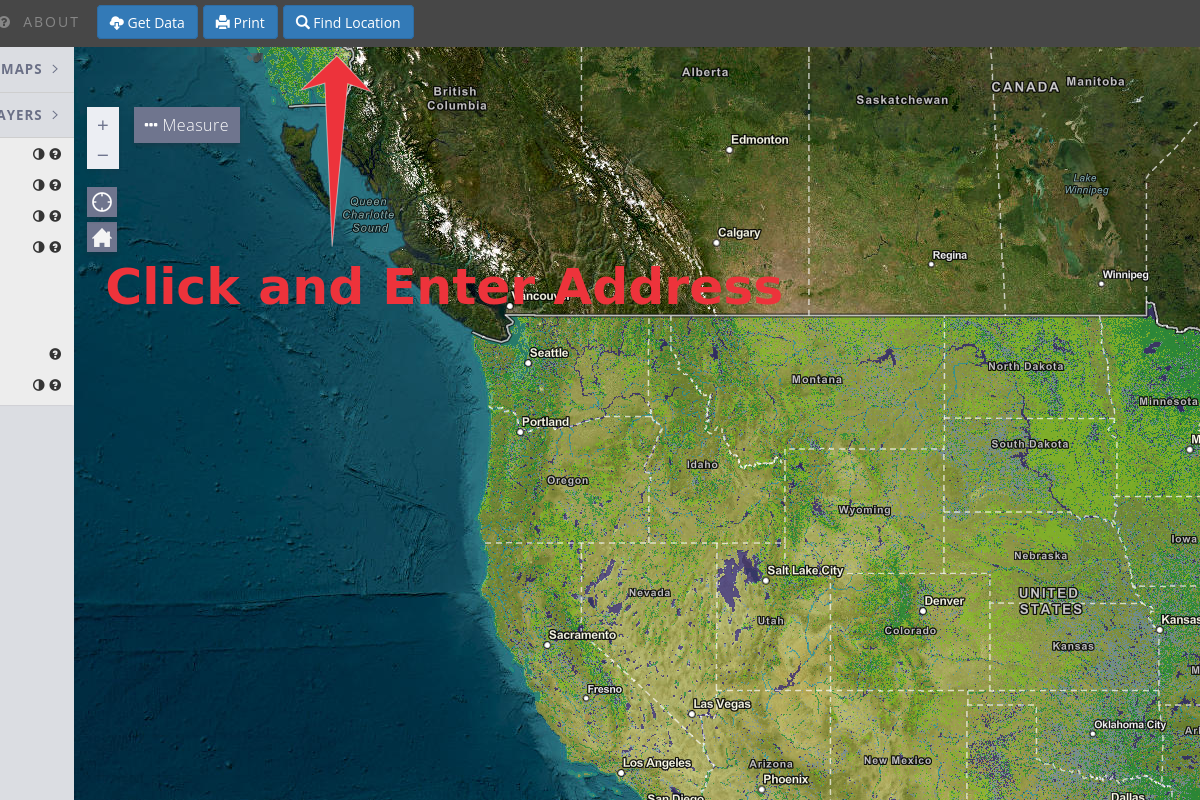
Click on the “Find Location” button and Enter Address.
Step 5 — Verify Access (One of the Most Overlooked Steps)
This is the one that is gonna get you.
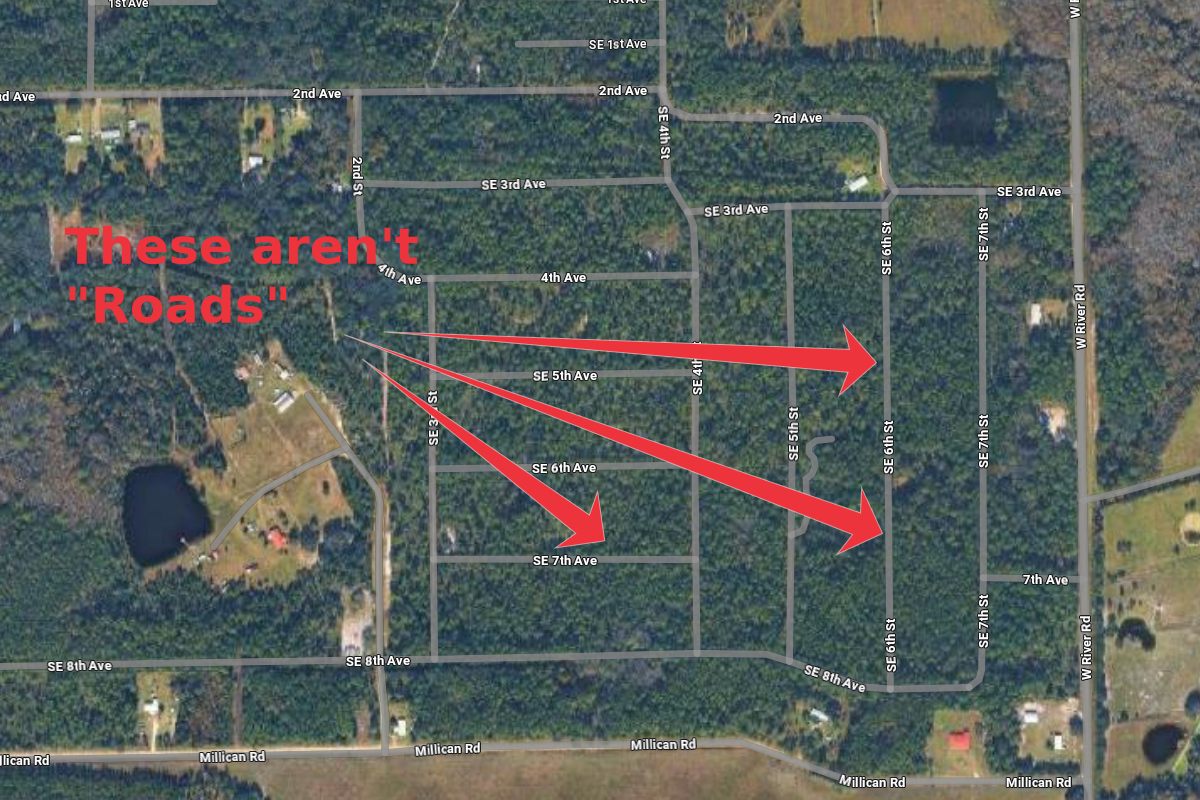
These are “Trails” not really roads.
Make sure you can get to the property.
The best thing is to have a 911 address.
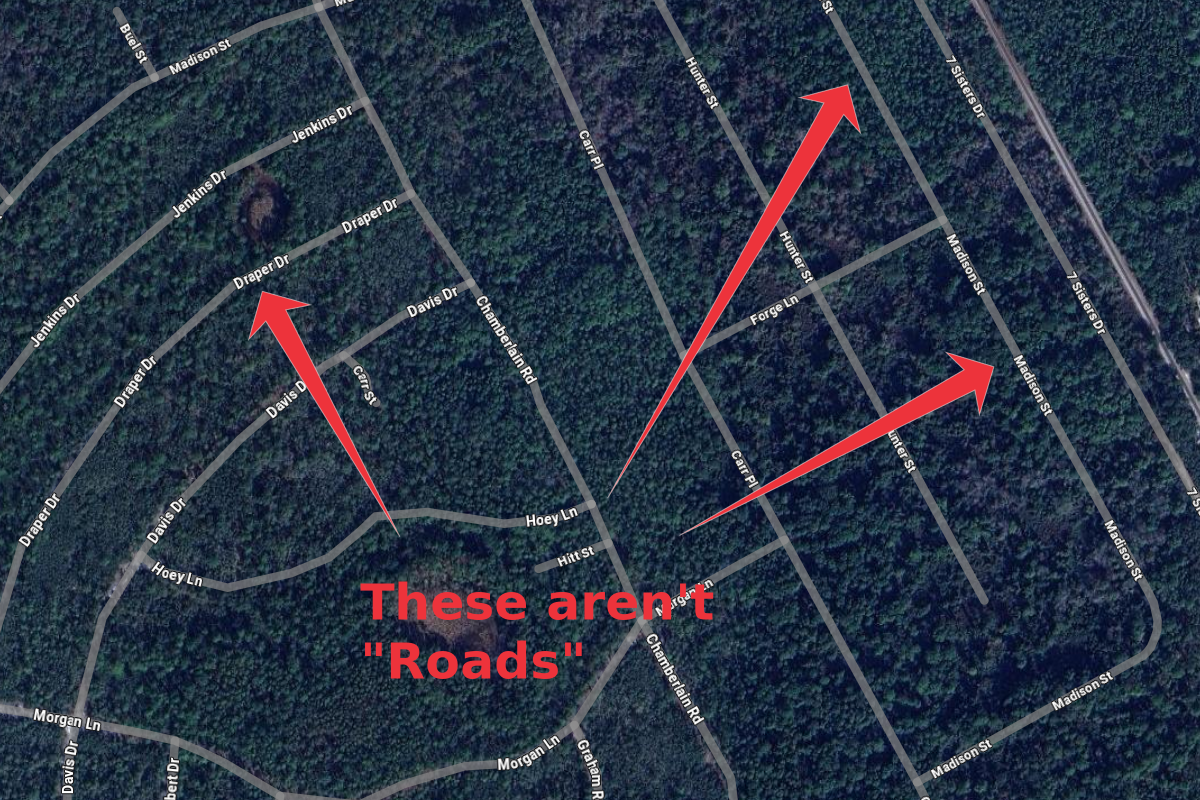
You’d need a Swamp Buggy to access.
Always make sure you can get to the propery.
Don’t get “Land Locked”
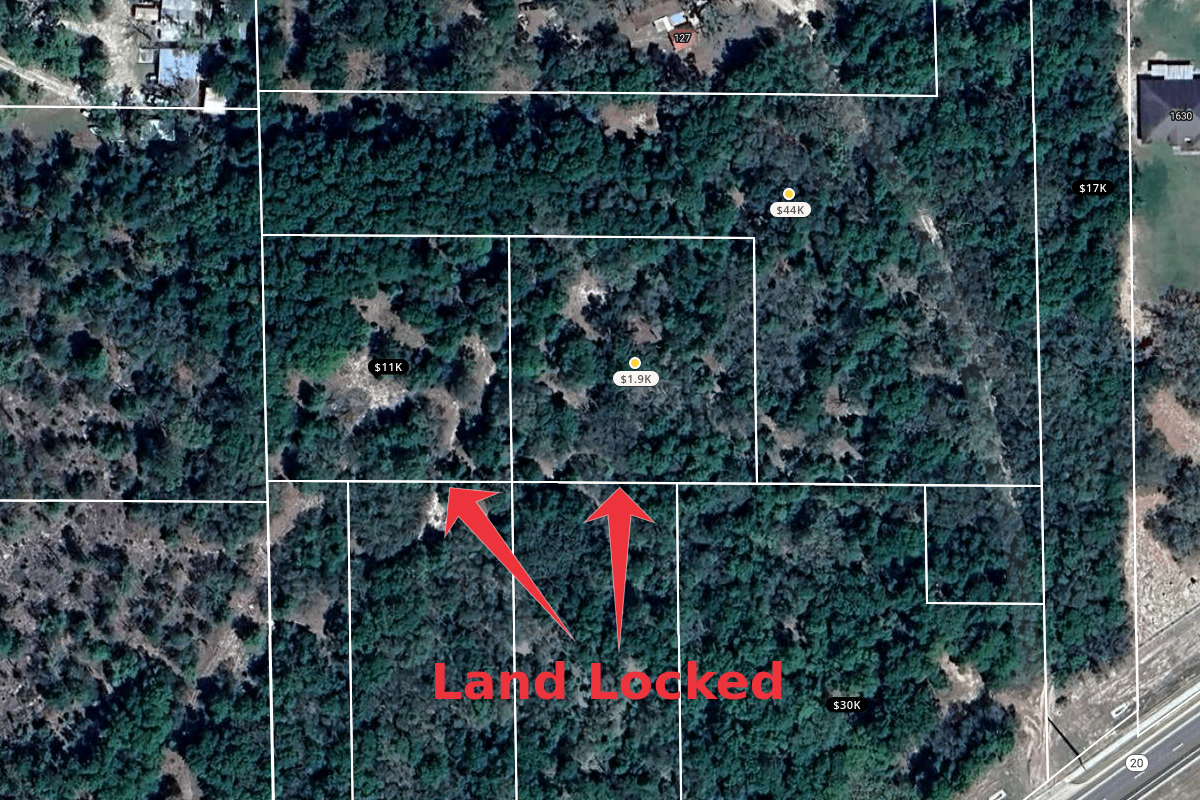
Finding a property that is land locked is rare.
But it still happens. Always make sure that you can access the property.
Check whether the parcel has:
• Paved road access
• County-maintained road
• Private road or easement
• Landlocked status (no legal access)
If access is unclear, check the deed history or contact the Property Appraiser.
Easiest thing to do is look at the satellite image on Google Maps.
/https://www.putnam-fl.gov/departments/public-works-services/public-works/
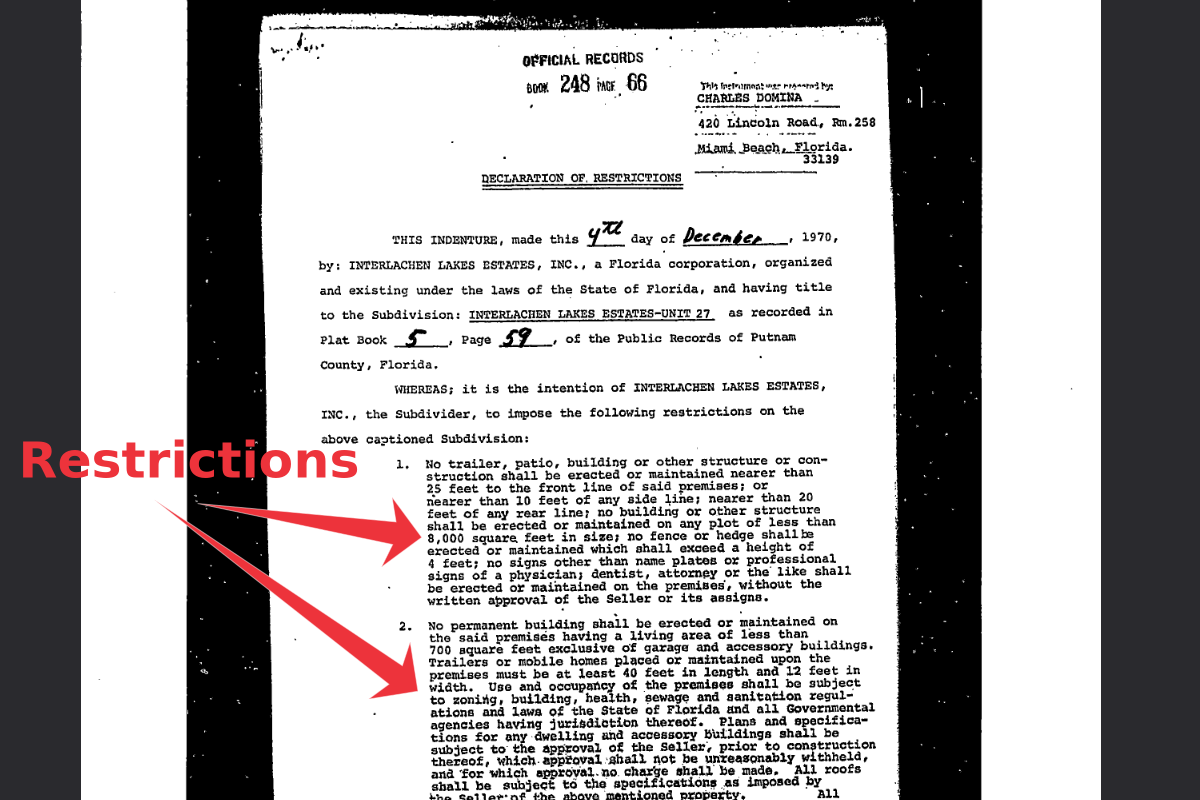
Step 6 — Look for Deed Restrictions
Some subdivisions in Interlachen, Hawthorne, and other areas have deed restrictions—even without HOAs.
Look Up the Parcel on the Property Appraiser Website
Putnam County Property Appraiser Search Tool (https://apps.putnam-fl.com/pa/property/)
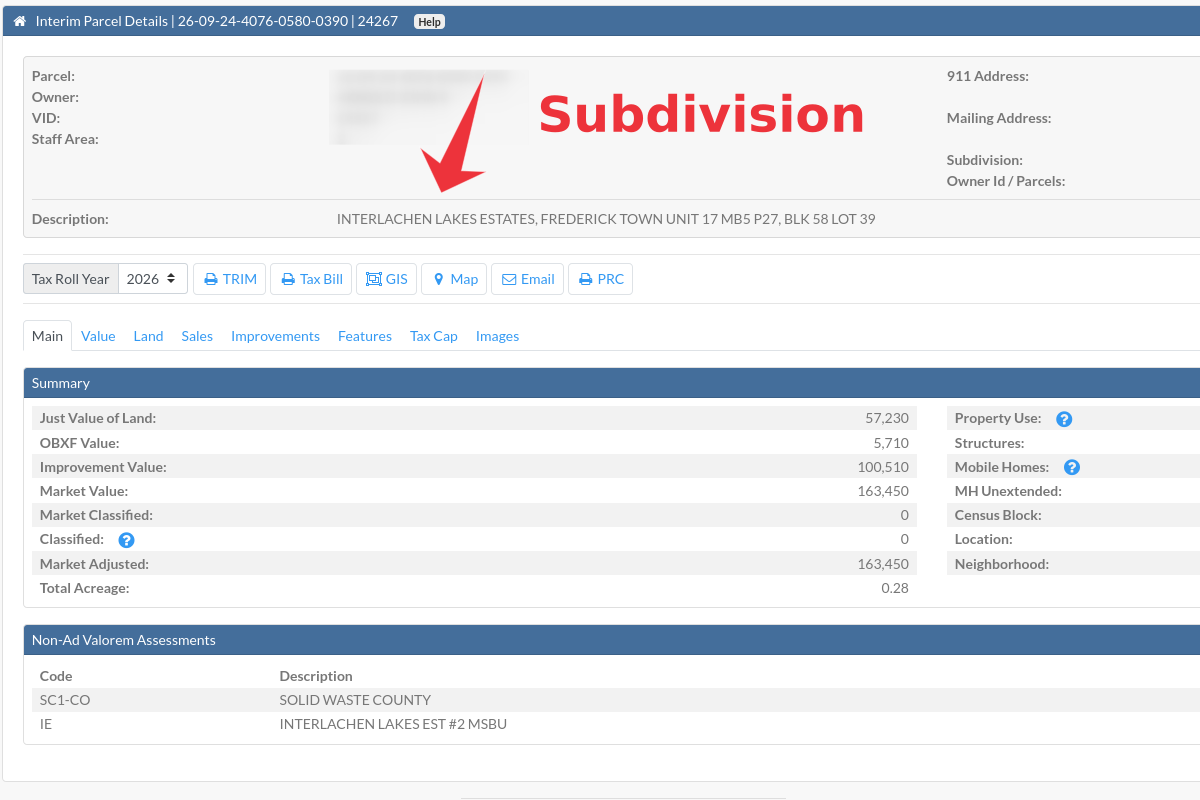
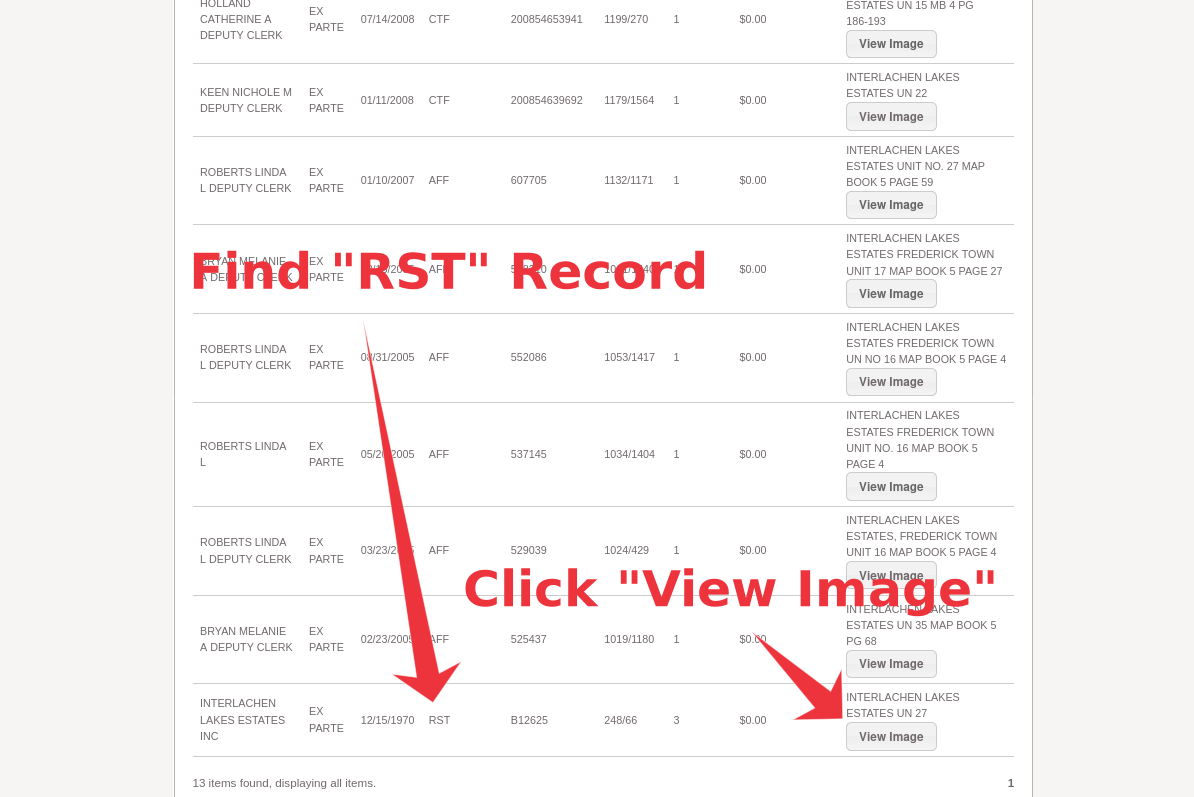
In Putnam County, deed restrictions are almost always created by subdivisions.If the property is part of a named subdivision (like Interlachen Lakes Estates, Lakeside Hills, High Ridge, etc.), then restrictions may exist.
Go to the Clerk of Courts (Official Records Search)
https://www.myfloridacounty.com/orisearch/s/index?q1=1i_25F6bNFpUFA0aD1ETNA
Enter the Subdivision Name into the Legal Description search field.
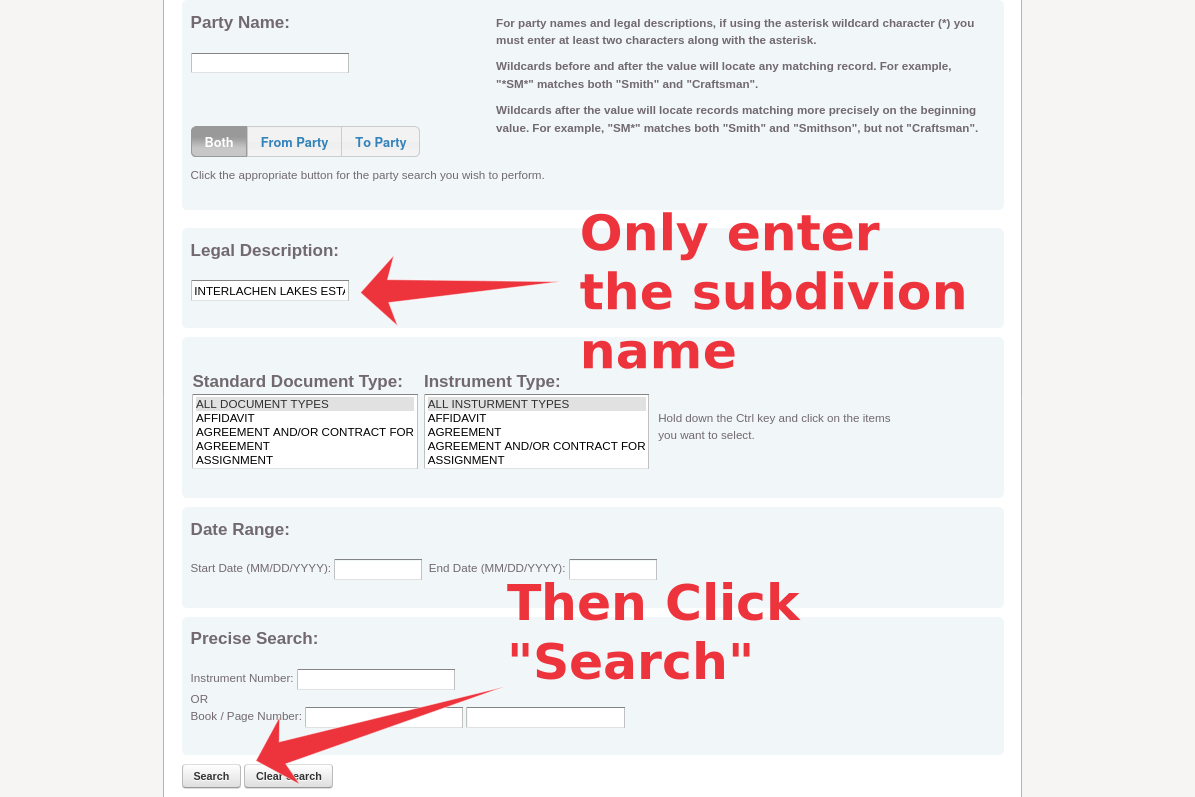
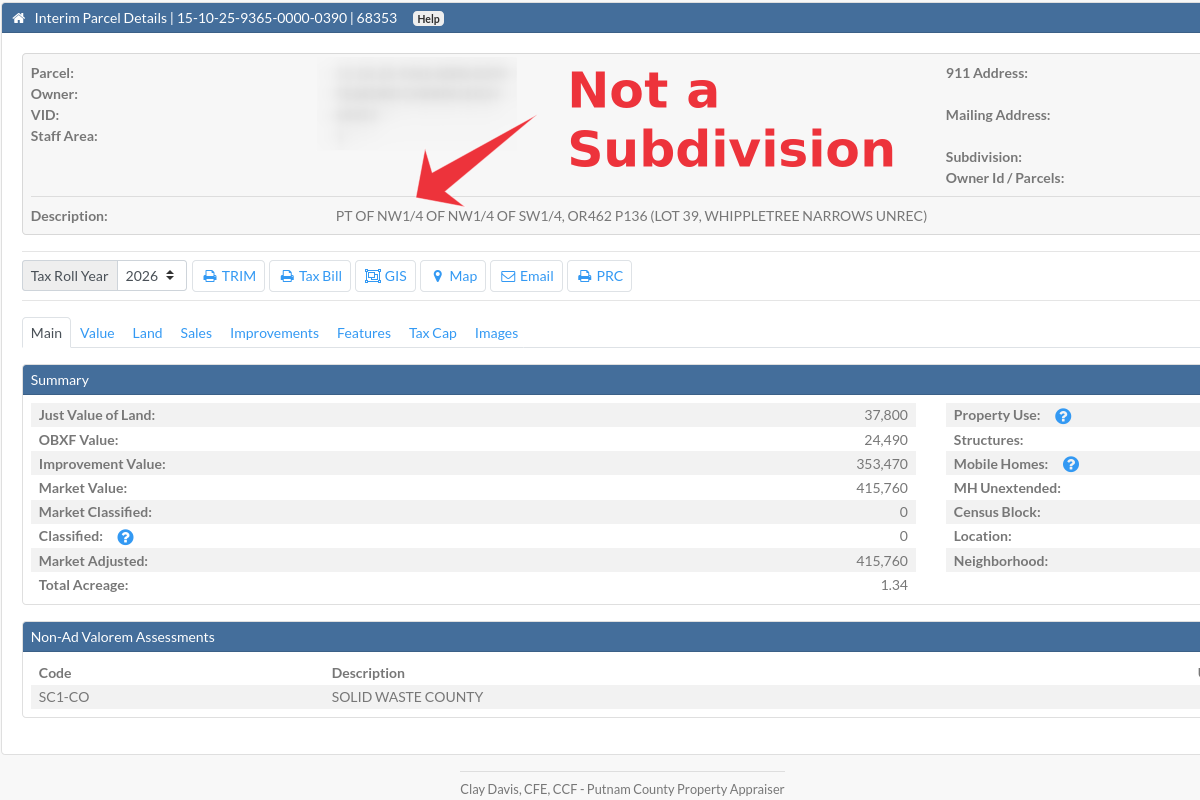
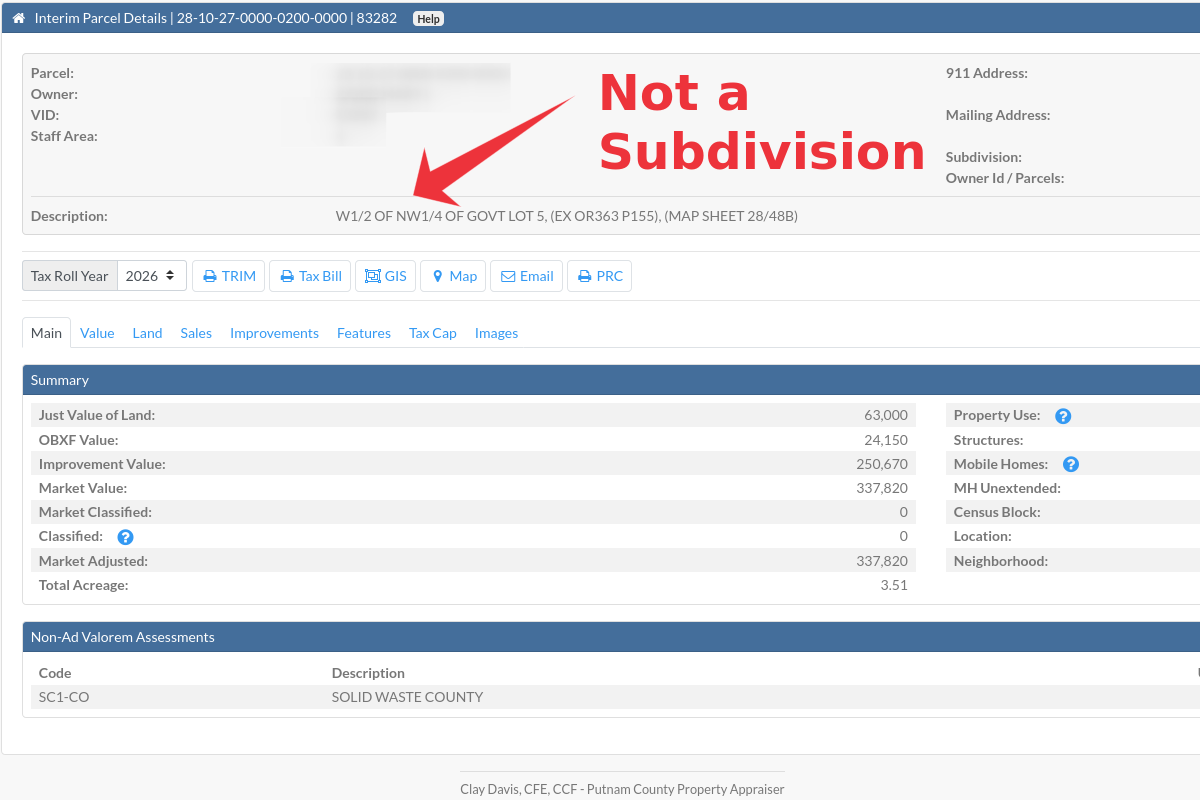
If there is not a subdivision. There’s usually no restrictions.
Step 7 — Confirm Septic Requirements (Critical in Putnam County)
Before buying land in Putnam County, you MUST confirm whether the property will require an Aerobic Treatment Unit (ATU) septic system.
Putnam County is in a BMAP (Basin Management Action Plan) area, and a high percentage of new septic systems now require ATUs.
ATUs are significantly more expensive to install and require ongoing maintenance, so this step can dramatically affect the cost of developing a property.
To get accurate information, contact:
Florida Department of Health – Putnam County
Contact: Dianne Coffey
Phone: 386-326-7189
Email: dianne.coffey@flhealth.gov](mailto:dianne.coffey@flhealth.gov
Provide the 911 address, not just the parcel number.
Most new septic systems in Putnam County now require an ATU
Because most of the county falls within a BMAP area, ATUs are becoming standard for many parcels.
If an ATU is required, the homeowner must keep BOTH:
A lifetime maintenance contract, and
A valid OSTDS Operating Permit (Onsite Sewage Treatment and Disposal System)
These are required for the life of the system, not just at installation.
ATU systems must be inspected 3 times per year.
Twice a year by a licensed private inspector and once a year by the Department of Health.
None of these are free.
To check whether an ATU is required, you must contact Department of Health
Send the 911 address to Dianne — septic requirements cannot be accurately determined from parcel numbers alone.
Septic and wells must be separated by at least 75 feet
This includes:
Your septic tank must be 75 ft from your own well,
AND 75 ft from any neighboring wells.
This setback requirement is a common reason some parcels are difficult or impossible to build on.
Lot size does NOT automatically exempt a property from ATU requirements
Previously, many properties larger than 1 acre did not require ATUs.
However:
Beginning January 2026, some properties will require an ATU regardless of lot size.
This is due to statewide environmental updates affecting certain BMAP zones.
Buyers must verify the rule for the specific parcel.
Final Buyer Advice for Step 7
Because septic feasibility can make or break a land purchase:
Always contact the Health Department BEFORE buying.
Provide the 911 address and request confirmation of:
Whether an ATU is required
Whether the property has any soil limitations
Any additional setbacks or constraints
Never rely on verbal statements from sellers or realtors about septic eligibility.
Factor ATU installation and lifetime contract costs into your budget if required.
Local Septic Contractor (No Affiliate)
https://www.lanesseptic.com/atu-aerobic-treatment-unit
Onsite Sewage Program
https://floridadep.gov/water/onsite-sewage
Owners Guide
https://floridadep.gov/water/onsite-sewage/content/information-septic-system-owners-and-buyers
Step 8 — Look for Any Red Flags
Red flags include:
• No legal access
• Wetlands covering more than 50% of the property
• Flood Zone A or AE
• Deed restrictions limiting use
• Mismatch between advertised and official acreage
• Encroachments on aerial photography
** ATU Requirement
Final Advice from Dusty Roads LLC
If you want help reviewing a parcel, Dusty Roads LLC offers a free lot research review. We’ll check zoning, access, restrictions, wetlands, and more. This quick review can save new buyers thousands of dollars and weeks of frustration.
Dusty Roads LLC Terry Mullins - Owner / Operator Phone: 352-520-2010
Email: terrym@dustyroadsllc.com
Website: DustyRoadsLLC.com
Serving Putnam, Marion, St. Johns, Flagler & Clay Counties